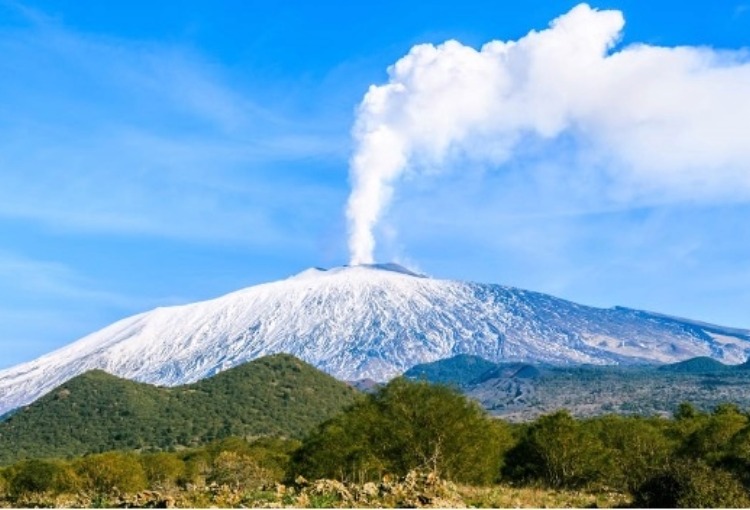
IDDA is a deliberate, high-profile partnership: a joint venture Angelo Gaja launched with Alberto Graci to farm and vinify Etna fruit with the sort of attention and resources the Gaja name brings to any terroir project. The project began in the late 2010s and has quickly moved from pilot parcels into a proper production estate on the southern slopes of Mount Etna — a move that gives Gaja direct access to Carricante and Nerello sites he admires and to Graci’s deep local know-how.
Angelo Gaja’s involvement matters because Gaja is not merely a famous name: he is one of the architects of modern Italian fine wine, the man who pushed single-vineyard thinking, modern cellar practices and international standards into Piedmont and, in doing so, rewrote how Italian terroir is presented to the world. When Gaja commits to a region he brings capital, distribution, and an obsessive focus on expressing place, which turns any collaboration into both a technical experiment and a statement of confidence in that terroir.
Alberto Graci and his family supply the local mastery that makes IDDA credible on Etna. The Graci holdings sit on varied, high-altitude sites on Etna’s southern exposures where volcanic soils, altitude and diurnal range favour the island’s classic grapes — Carricante for white and Nerello Mascalese for red — and where careful, low-yield viticulture produces intensely mineral, focused fruit. Graci’s reputation is built on translating Etna’s ash, lava and altitude into crystalline wines, so pairing that sensitivity with Gaja’s technical and commercial muscle was a natural fit.
For Gaja the project is strategically simple but culturally bold: Etna offered something his long career in Piedmont and Bolgheri could not — a volcanic vocabulary and an emphasis on white wines from a storied island terroir. IDDA lets him test how his ideas about precision, ageing and site expression travel beyond Nebbiolo, Sangiovese or international varieties; it also elevates Etna by putting Gaja’s imprimatur (and investment in a dedicated winery and team) behind the place, accelerating attention and infrastructure for the southern slopes. In short, IDDA is both a terroir exploration and a signal — Gaja saying Etna’s southern Carricante and Nerello plots deserve the same careful, long-term thinking he applied to Barbaresco.
And that is great news for Sicily — and for us — as we get to experience Gaja’s mastery coupled with Graci’s deep connection and knowledge of Europe’s most active volcano, at prices Gaja’s Piedmont crus haven’t seen since the 1980s.
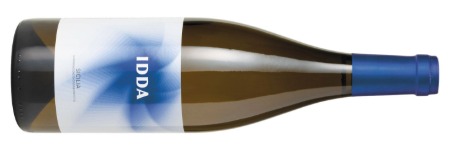
IDDA Bianco 2024
The Bianco is 100% Carricante, the native white grape variety of Mount Etna. The vineyards are located in Biancavilla (south-west slope of Etna) at about 700-800 m elevation, and in Belpasso (southern slope) at about 600-700 m. These two sites give different contributions: Biancavilla tends to preserve higher acidity, cooler night temperatures and mineral lift, while Belpasso gives more warmth, riper fruit and texture. Soils are volcanic—ash, lavic sand, gravel—in these southern exposures; there’s little clay or limestone, so good drainage and strong diurnal contrasts are key.
Harvest was in October when the grapes reached optimal balance of sugar, acidity and varietal flavour. Vigilant selection is used to pick the cleanest bunches and avoid over ripeness.
The grapes are cold-pressed whole bunches, to extract the aromatics with minimal oxidative stress. After pressing, there is a static clarification to settle out solids. Fermentation is performed under controlled temperature, between 18-20 °C, some in stainless steel, some in 10-hectolitre oak barrels. The use of oak for a portion gives texture and slight richness but the aim is clarity of fruit, freshness, minerality. The wine was filtered, and bottled after about one year.
The 2024 shows bright citrus, white stone fruit, floral and herbal notes, with a strong mineral backbone, saline hints, and taut acidity. Because of the altitude and volcanic soil, the wine has a vivid freshness and texture from oak is well integrated and harmonious rather than dominating.
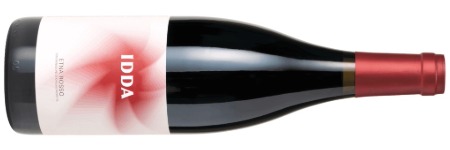
IDDA Rosso 2023
The Rosso is based mainly on Nerello Mascalese (with a miniscule amount of a distant cousin, Nerello Cappuccio) from vineyards between 600-800 m elevation in the same zone (Belpasso and Biancavilla). These vineyards are volcanic, with soils of lava, ash, porous rock—so drainage is excellent and roots can penetrate deeply, which helps with stress and flavour complexity.
Harvest was mid to late season for the red grapes, when phenolic ripeness is achieved but acidity is still present. Grapes are harvested by hand to ensure selection with a careful eye on quality of fruit.
After harvest the grapes undergo fermentation and maceration for about three weeks, using both concrete vats and some wooden vessels. Some portion is in wood (oak) and some in cement (or concrete) to balance between elegance, freshness, and structure. After fermentation / maceration, the wine is aged in a combination of wood and concrete to both build complexity and preserve place-expression.
The 2023 Rosso has bright red fruit (cherry, pomegranate, perhaps some darker berries), smoky /volcanic earth notes, a degree of herbal or underbrush nuance, lively acidity, fine-grained tannins, a mineral finish, with firmness but also elegance. The finishing texture tends to lean on mineral, not heavy oak or overt ripeness. It’s a tantalizing glass of wine full of mineral, warmth and complexity to carry it through many years of cellaring while still extremely enjoyable now.
The wines above are ready for delivery mid November |
 |
 |
|
|
|
||||||||||||
 |
|
|
|
||||||||||||
| Monday-Tuesday |
| Closed |
| Wednesday-Friday |
| 12:00 pm - 7:00 pm |
| Saturday - Sunday |
| 12:00 pm - 5:30 pm |
| Copyright © 2026 All rights reserved | 


| Website Powered by WineFetch |